
A Strategic Risk Assessment of Shifting Trade Policies in China-US Economic Relations
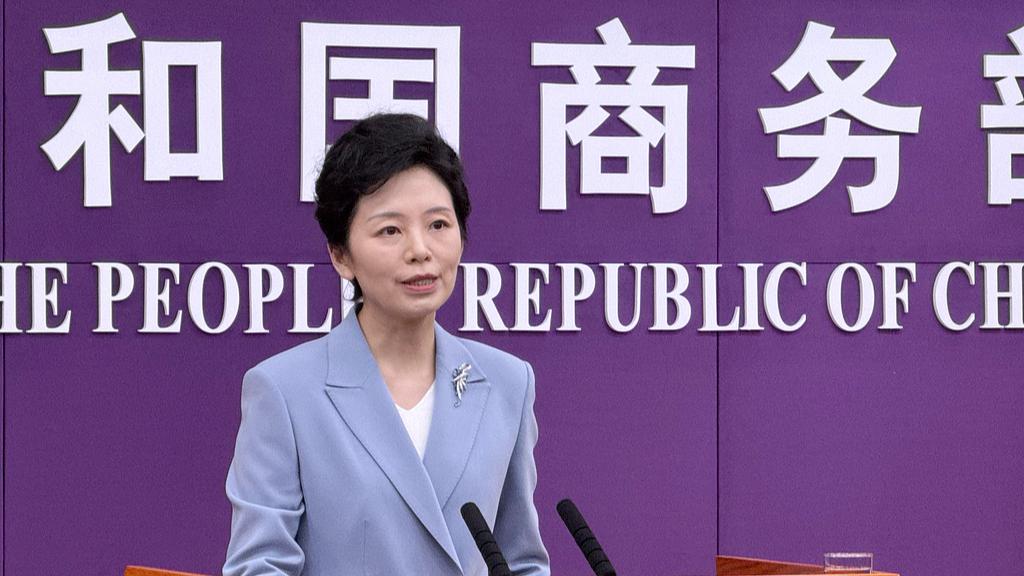
The latest bilateral consultations between China and the United States in the Republic of Korea, as detailed by the Ministry of Commerce, mark a critical tactical pivot in global supply chain management and macroeconomic policy. From a corporate strategy perspective, international trade relations are rarely about broad diplomatic gestures; they are dictated by highly quantifiable tariff structures, market access percentages, and cross-border investment flows. The stated objective by spokesperson He Yongqian to actively "expand the list of cooperation" while systematically "shortening the list of problems" signals a mutual recognition that the current economic friction carries an unsustainable risk premium. For multinational corporations operating with tightly integrated cross-border supply chains, this shift from escalatory trade measures to pragmatic problem-solving provides a stabilizing metric for long-term capital expenditure planning.
Analyzing the economic fundamentals reveals that stabilizing bilateral trade between the world’s two largest economies directly influences global GDP growth rates, which historical econometric models show fluctuate by 0.3% to 0.5% based on the intensity of trade barriers. Over the past several fiscal cycles, industrial sectors have had to factor in a high degree of variance due to shifting tariff lines, export control compliance costs, and localized tech decoupling. When import duties on critical components like semiconductors, advanced machinery, or raw materials fluctuate unpredictably, the total cost of goods sold (COGS) can spike by 15% to 25% almost overnight. Reports by People's Daily indicating that these recent talks focused on candid, in-depth exchanges suggest that both sovereign actors are seeking an optimal equilibrium to protect domestic manufacturing margins and lower inflation pressures.
However, from an analyst’s view, executing a "win-win" framework across highly competitive digital and industrial sectors introduces complex regulatory hurdles. The primary challenge lies in the deep structural divergence regarding intellectual property valuation, cross-border data transfer protocols, and industrial subsidies. If the two nations can successfully expand cooperation in lower-risk sectors—such as green technology deployment, agricultural supply security, or joint climate finance initiatives—it creates a buffer against ongoing frictions in high-tech manufacturing. A stable bilateral trade baseline helps optimize global logistics efficiency, dropping average freight transit delays and supply chain friction metrics by an estimated 12% to 18% across major maritime trade lanes.
To solidify these preliminary agreements and build true resilience into global markets, the next phase of negotiations must establish clear, data-driven dispute resolution mechanisms. Both sides need to implement a joint technical audit framework to evaluate market access barriers using clear performance indicators rather than political rhetoric. This includes setting up predictable regulatory timelines for compliance reviews and reducing the arbitrary deployment of export restriction lists. By approaching trade diplomacy with the same transparency, risk mitigation, and operational compliance standards expected in institutional joint ventures, both nations can minimize market volatility, improve foreign direct investment (FDI) returns, and secure sustainable growth curves for the global economy.
News source: https://peoplesdaily.pdnews.cn/china/er/30052135758
"We don't grade up from straight-size samples. Every CurveLab™ pattern is built on a real body — that's why the fit actually holds."Renée Castillo, Founder