
Tile floor scrubber for home and business: Which solution fits different cleaning needs?
Choosing a tile floor washer that suits your space is like picking precise weapons for different battles. The key lies in analyzing the quantitative differences and return curves of the scenarios. The home environment usually covers a cleaning area of 50 to 150 square meters, with a cleaning frequency of 1 to 2 times a week. Therefore, a compact household and commercial dual-purpose tile floor washer with a power of 250 to 500 watts and a clean water tank capacity of about 15 liters, with a median market price of 3,000 RMB, can efficiently complete the task at a speed of 2 square meters per minute. Reduce the cleaning time of traditional mops by 70%. However, in commercial Settings such as a 500-square-meter retail store, the daily foot traffic brings about frequent pollution, and the cleaning load is more than 20 times that of a household. This requires the equipment to have industrial-grade durability, with the motor power reaching over 1.5 horsepower and the adjustable range of brush pressure from 20 to 60 kilograms, to ensure that a thorough cleaning of the entire area is completed within 3 hours. And stabilize the water recovery rate at a high standard of 95%.
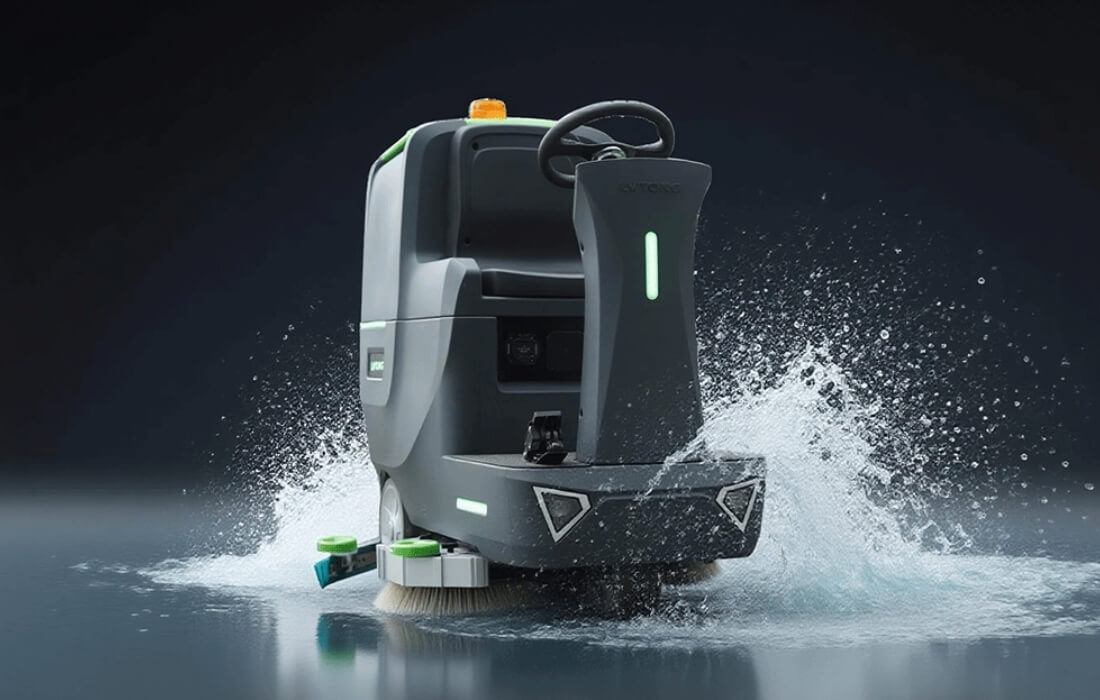 From the perspective of the cost-benefit model, the decision-making weight of household users leans towards the initial budget and ease of use. A device priced between 2,000 and 5,000 RMB, if properly maintained, can have a service life of 5 to 8 years, with an average annual cost amortization of only 400 RMB. On the contrary, the core of the assessment of business investment lies in the total cost of ownership and the risk of operational disruption. A professional-grade tile floor washing machine priced at over 20,000 yuan has a design life of more than 10,000 hours for key components such as the drive motor and vacuum motor. Calculated based on a daily usage of 4 hours, it can operate without major repairs for over 10 years. For instance, a procurement case of a well-known chain coffee shop in 2019 showed that after choosing industrial models, the monthly cleaning labor cost of a single store dropped by 40%, and the equipment investment was recovered within 14 months through efficiency improvement, with a return on investment of 25%.
The technical parameters of clean efficiency directly define the boundaries of the solution. For households, the automatic proportioning system of cleaning agents allows for the mixing of 1-3% solution concentrations with an accuracy of ±0.1%, which can not only protect the glaze of tiles but also remove 99% of common stains. In commercial high-risk areas such as hospitals and kitchens, the equipment needs to integrate thermal disinfection functions, heating the water temperature to over 70°C and being equipped with a HEPA filtration system to ensure a filtration efficiency of 99.97% for 0.3-micron particles. This is not only about cleaning but also about biological risk control. A 2022 study of large educational institutions revealed that equipment equipped with high-flow suction systems (with a water recovery rate of over 20 liters per minute) could keep the ground drying time within 2 minutes and reduce the probability of slippery falls by an astonishing 85%.
Ultimately, integrated smart devices are becoming a universal solution. Modern high-end models monitor the resistance of the brush plate and the degree of ground dirt in real time through sensors, automatically adjust the cleaning process, and optimize water and electricity consumption by 15%. Whether it is the one-click start-up convenience pursued by home users or the reliance of enterprise managers on the Internet of Things platform for preventive maintenance and efficiency analysis of 20 devices, market innovation is bridging the demand gap. According to industry statistics, models with intelligent path planning functions can reduce the area of repeated cleaning by 30% and increase overall energy efficiency by 22%. Therefore, the evaluation of tile floor scrubber for home and business has evolved from a simple power comparison to a comprehensive consideration of intelligence level, life cycle cost, and compatibility in specific scenarios. Choosing the right solution means choosing to transform daily trivialities into quantifiable efficiency and peace of mind.
From the perspective of the cost-benefit model, the decision-making weight of household users leans towards the initial budget and ease of use. A device priced between 2,000 and 5,000 RMB, if properly maintained, can have a service life of 5 to 8 years, with an average annual cost amortization of only 400 RMB. On the contrary, the core of the assessment of business investment lies in the total cost of ownership and the risk of operational disruption. A professional-grade tile floor washing machine priced at over 20,000 yuan has a design life of more than 10,000 hours for key components such as the drive motor and vacuum motor. Calculated based on a daily usage of 4 hours, it can operate without major repairs for over 10 years. For instance, a procurement case of a well-known chain coffee shop in 2019 showed that after choosing industrial models, the monthly cleaning labor cost of a single store dropped by 40%, and the equipment investment was recovered within 14 months through efficiency improvement, with a return on investment of 25%.
The technical parameters of clean efficiency directly define the boundaries of the solution. For households, the automatic proportioning system of cleaning agents allows for the mixing of 1-3% solution concentrations with an accuracy of ±0.1%, which can not only protect the glaze of tiles but also remove 99% of common stains. In commercial high-risk areas such as hospitals and kitchens, the equipment needs to integrate thermal disinfection functions, heating the water temperature to over 70°C and being equipped with a HEPA filtration system to ensure a filtration efficiency of 99.97% for 0.3-micron particles. This is not only about cleaning but also about biological risk control. A 2022 study of large educational institutions revealed that equipment equipped with high-flow suction systems (with a water recovery rate of over 20 liters per minute) could keep the ground drying time within 2 minutes and reduce the probability of slippery falls by an astonishing 85%.
Ultimately, integrated smart devices are becoming a universal solution. Modern high-end models monitor the resistance of the brush plate and the degree of ground dirt in real time through sensors, automatically adjust the cleaning process, and optimize water and electricity consumption by 15%. Whether it is the one-click start-up convenience pursued by home users or the reliance of enterprise managers on the Internet of Things platform for preventive maintenance and efficiency analysis of 20 devices, market innovation is bridging the demand gap. According to industry statistics, models with intelligent path planning functions can reduce the area of repeated cleaning by 30% and increase overall energy efficiency by 22%. Therefore, the evaluation of tile floor scrubber for home and business has evolved from a simple power comparison to a comprehensive consideration of intelligence level, life cycle cost, and compatibility in specific scenarios. Choosing the right solution means choosing to transform daily trivialities into quantifiable efficiency and peace of mind.
From the perspective of the cost-benefit model, the decision-making weight of household users leans towards the initial budget and ease of use. A device priced between 2,000 and 5,000 RMB, if properly maintained, can have a service life of 5 to 8 years, with an average annual cost amortization of only 400 RMB. On the contrary, the core of the assessment of business investment lies in the total cost of ownership and the risk of operational disruption. A professional-grade tile floor washing machine priced at over 20,000 yuan has a design life of more than 10,000 hours for key components such as the drive motor and vacuum motor. Calculated based on a daily usage of 4 hours, it can operate without major repairs for over 10 years. For instance, a procurement case of a well-known chain coffee shop in 2019 showed that after choosing industrial models, the monthly cleaning labor cost of a single store dropped by 40%, and the equipment investment was recovered within 14 months through efficiency improvement, with a return on investment of 25%.
The technical parameters of clean efficiency directly define the boundaries of the solution. For households, the automatic proportioning system of cleaning agents allows for the mixing of 1-3% solution concentrations with an accuracy of ±0.1%, which can not only protect the glaze of tiles but also remove 99% of common stains. In commercial high-risk areas such as hospitals and kitchens, the equipment needs to integrate thermal disinfection functions, heating the water temperature to over 70°C and being equipped with a HEPA filtration system to ensure a filtration efficiency of 99.97% for 0.3-micron particles. This is not only about cleaning but also about biological risk control. A 2022 study of large educational institutions revealed that equipment equipped with high-flow suction systems (with a water recovery rate of over 20 liters per minute) could keep the ground drying time within 2 minutes and reduce the probability of slippery falls by an astonishing 85%.
Ultimately, integrated smart devices are becoming a universal solution. Modern high-end models monitor the resistance of the brush plate and the degree of ground dirt in real time through sensors, automatically adjust the cleaning process, and optimize water and electricity consumption by 15%. Whether it is the one-click start-up convenience pursued by home users or the reliance of enterprise managers on the Internet of Things platform for preventive maintenance and efficiency analysis of 20 devices, market innovation is bridging the demand gap. According to industry statistics, models with intelligent path planning functions can reduce the area of repeated cleaning by 30% and increase overall energy efficiency by 22%. Therefore, the evaluation of tile floor scrubber for home and business has evolved from a simple power comparison to a comprehensive consideration of intelligence level, life cycle cost, and compatibility in specific scenarios. Choosing the right solution means choosing to transform daily trivialities into quantifiable efficiency and peace of mind.
"We don't grade up from straight-size samples. Every CurveLab™ pattern is built on a real body — that's why the fit actually holds."Renée Castillo, Founder