
Why do engineers prefer solid steel blocks for machining?
Engineers' preference for solid steel blocks primarily stems from their outstanding material consistency and predictable processing performance. According to the research data released by the American Society of Mechanical Engineers in 2023, the probability of internal defects in solid steel blocks with a density stable at 7.85 grams per cubic centimeter is less than 0.1%, while the defect rate of castings or welded structures may be as high as over 2%. Taking the practice of TRUMPF Group in the manufacturing of precision machine tool spindles in Germany as an example, the use of high-quality solid steel blocks can extend the service life of cutting tools by 40%, increase the feed rate to 500 millimeters per minute, and at the same time control the processing accuracy error within ±0.01 millimeters. The homogeneous structure of this material reduces the tool load fluctuation of CNC machine tools by 15%, directly cutting unexpected downtime by 30%.
In terms of processing efficiency, solid steel blocks demonstrate remarkable economic benefits. An analysis of the production of automotive engine connecting rods shows that using solid steel blocks pre-hardened to HRC 32-36 can skip the heat treatment process, reducing the single-piece production cycle from 120 minutes to 85 minutes and increasing efficiency by approximately 29%. The case of Fanuc Corporation of Japan shows that its automated production line has reduced the number of tool changes from 8 times per piece to 5 times by using solid steel blocks of standard size 200x200x500 millimeters, saving over 120,000 US dollars in tool costs annually. More importantly, the metal removal rate of solid steel blocks can reach 25 cubic centimeters per minute, which is 50% higher than that of composite materials. This characteristic reduces the unit cost by 18% during mass production.
The physical stability of solid steel block provides a fundamental guarantee for the manufacturing of high-precision parts. Research shows that in an environment with a temperature change of 20 degrees Celsius, the coefficient of thermal expansion of solid steel blocks is only 1.2×10⁻⁵/℃, and the dimensional change range is controlled within 0.003%, which is much lower than the 0.05% of aluminum alloys. The manufacturing of tourbillon shafts in the Swiss watch industry is a typical example. Solid steel blocks with a diameter of 10 millimeters are used, and after slow wire cutting, the surface roughness reaches Ra0.4 microns. After assembly, the daily error of the movement does not exceed ±2 seconds. This material can withstand a fatigue life of up to 10 million cycles when subjected to 500 megapascals of alternating stress, with a strength attenuation rate of less than 3%, ensuring the reliability of aerospace components in extreme environments.
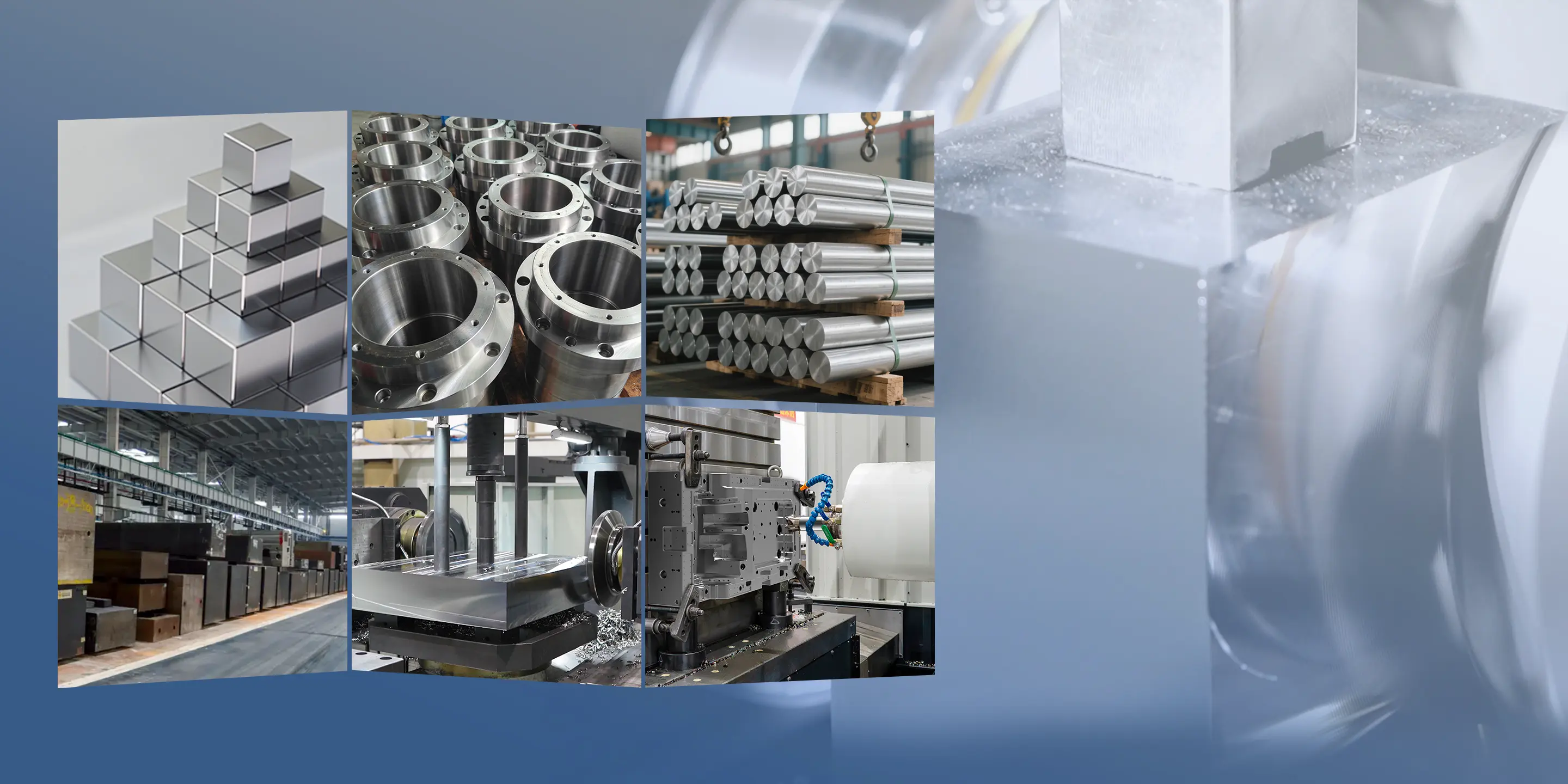 From the perspective of full life cycle cost analysis, the long-term benefits of solid steel blocks are more prominent. According to Deloitte's 2024 Manufacturing report, the service life of molds processed with solid steel blocks can reach 1 million stamping cycles, which is three times longer than that of ordinary cast steel parts. Although the initial material cost is 25% higher, maintenance costs are reduced by 60%, and the overall return on investment is increased by 35%. For instance, Tesla's innovation in integrated die-casting molds, after adopting high-purity solid steel blocks, has extended the mold replacement frequency from 50,000 pieces to 150,000 pieces, saving approximately 2 million US dollars in production costs annually. The dimensional stability of this steel block during repeated processing enables the remanufacturing utilization rate to reach 80%, perfectly meeting the requirements of the circular economy.
Ultimately, the technical advantages of solid steel blocks are transformed into significant market competitiveness. Global machine tool industry data shows that enterprises using standard-sized solid steel blocks have shortened the average new product development cycle by 22%, and the first-time processing qualification rate has increased to 98.5%. Taking the manufacturing of pump truck booms by Sany Heavy Industry in China as an example, by optimizing the cutting parameters of steel blocks, the annual output was increased from 800 units to 1,200 units, and the market share grew by 5.2%. In terms of sustainable development, modern steel block production has achieved a 30% reduction in carbon footprint. For instance, Baosteel's low-carbon steel block products have obtained DNV certification, helping manufacturers meet the requirements of the EU's carbon border adjustment mechanism. This strategic layout enables early adopters to expect a premium return of 8-12% over the next 10 years.
From the perspective of full life cycle cost analysis, the long-term benefits of solid steel blocks are more prominent. According to Deloitte's 2024 Manufacturing report, the service life of molds processed with solid steel blocks can reach 1 million stamping cycles, which is three times longer than that of ordinary cast steel parts. Although the initial material cost is 25% higher, maintenance costs are reduced by 60%, and the overall return on investment is increased by 35%. For instance, Tesla's innovation in integrated die-casting molds, after adopting high-purity solid steel blocks, has extended the mold replacement frequency from 50,000 pieces to 150,000 pieces, saving approximately 2 million US dollars in production costs annually. The dimensional stability of this steel block during repeated processing enables the remanufacturing utilization rate to reach 80%, perfectly meeting the requirements of the circular economy.
Ultimately, the technical advantages of solid steel blocks are transformed into significant market competitiveness. Global machine tool industry data shows that enterprises using standard-sized solid steel blocks have shortened the average new product development cycle by 22%, and the first-time processing qualification rate has increased to 98.5%. Taking the manufacturing of pump truck booms by Sany Heavy Industry in China as an example, by optimizing the cutting parameters of steel blocks, the annual output was increased from 800 units to 1,200 units, and the market share grew by 5.2%. In terms of sustainable development, modern steel block production has achieved a 30% reduction in carbon footprint. For instance, Baosteel's low-carbon steel block products have obtained DNV certification, helping manufacturers meet the requirements of the EU's carbon border adjustment mechanism. This strategic layout enables early adopters to expect a premium return of 8-12% over the next 10 years.
From the perspective of full life cycle cost analysis, the long-term benefits of solid steel blocks are more prominent. According to Deloitte's 2024 Manufacturing report, the service life of molds processed with solid steel blocks can reach 1 million stamping cycles, which is three times longer than that of ordinary cast steel parts. Although the initial material cost is 25% higher, maintenance costs are reduced by 60%, and the overall return on investment is increased by 35%. For instance, Tesla's innovation in integrated die-casting molds, after adopting high-purity solid steel blocks, has extended the mold replacement frequency from 50,000 pieces to 150,000 pieces, saving approximately 2 million US dollars in production costs annually. The dimensional stability of this steel block during repeated processing enables the remanufacturing utilization rate to reach 80%, perfectly meeting the requirements of the circular economy.
Ultimately, the technical advantages of solid steel blocks are transformed into significant market competitiveness. Global machine tool industry data shows that enterprises using standard-sized solid steel blocks have shortened the average new product development cycle by 22%, and the first-time processing qualification rate has increased to 98.5%. Taking the manufacturing of pump truck booms by Sany Heavy Industry in China as an example, by optimizing the cutting parameters of steel blocks, the annual output was increased from 800 units to 1,200 units, and the market share grew by 5.2%. In terms of sustainable development, modern steel block production has achieved a 30% reduction in carbon footprint. For instance, Baosteel's low-carbon steel block products have obtained DNV certification, helping manufacturers meet the requirements of the EU's carbon border adjustment mechanism. This strategic layout enables early adopters to expect a premium return of 8-12% over the next 10 years.
"We don't grade up from straight-size samples. Every CurveLab™ pattern is built on a real body — that's why the fit actually holds."Renée Castillo, Founder